HG-PA: Motion Designed with Imagination
Posted On Apr 21st 2026
Posted On Apr 21st 2026
Posted On Apr 21st 2026
In engineered systems, motion control is a functional requirement that directly affects safety, usability, and long-term reliability. The opening and closing behavior of lids, access panels, and enclosures must be predictable across thousands of cycles and varying environmental conditions.
For decades, gas springs and gas struts have been the standard solution for lift assistance. However, their performance variability and maintenance considerations have led many engineers to evaluate alternative technologies.
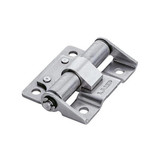
Sugatsune’s HG-PA series introduces a different approach through power-assist hinges that integrate motion control directly into the hinge mechanism. This eliminates the need for separate lift components while improving consistency, safety, and design flexibility.
Gas springs rely on compressed nitrogen gas combined with hydraulic oil inside a sealed cylinder. The gas provides a lifting force, while the oil contributes to damping.
From a design and performance standpoint, this introduces several constraints:
While gas struts are widely available and relatively simple to implement, their reliance on sealed-pressure systems introduces variability that must be accounted for in engineering calculations.
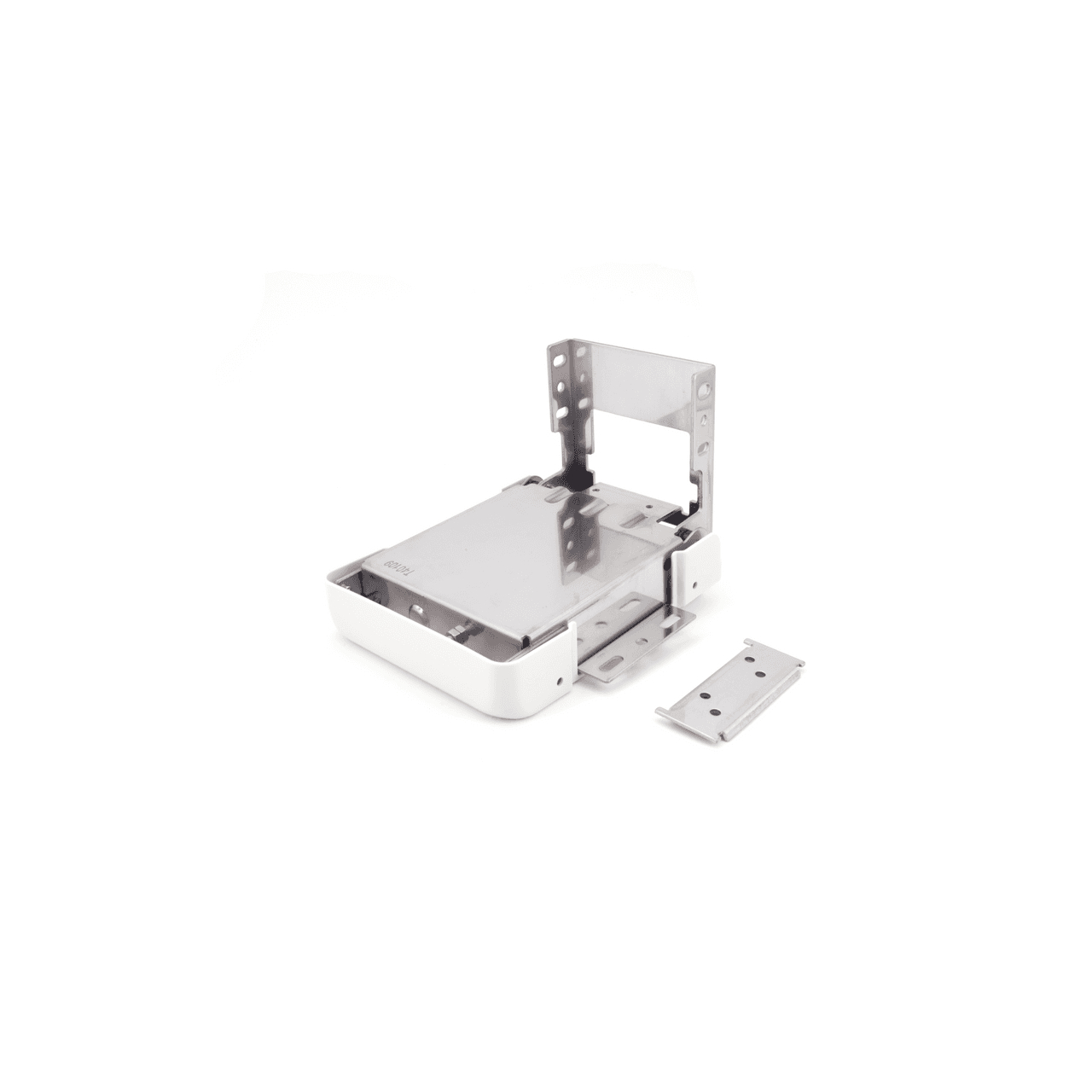
Sugatsune’s HG-PA series of mechanical power-assist hinges replaces pressurized systems with a fully mechanical architecture:
Because the system is not pressure-dependent:
This approach provides a more deterministic motion profile, which is critical for applications requiring repeatable performance.
| Feature | HG-PA Power-Assist Hinges | Gas Springs / Gas Struts |
| Core Mechanism | Mechanical spring + damper | Pressurized gas + oil |
| Force Stability | Consistent across environments | Temperature-dependent |
| Failure Mode | Gradual, predictable wear | Sudden pressure loss |
| Adjustability | ±5% torque tuning | Fixed force rating |
| Mounting Options | Multi-orientation | Orientation-dependent |
| Integration | Single compact unit | Requires separate hinge + strut |
| Maintenance | Minimal | Periodic replacement required |
| Safety Risk | No stored pressure | Stored energy risk |
From an engineering perspective, the primary advantage of power-assist hinges is control. Mechanical systems provide predictable torque curves, while gas-based systems require allowances for environmental variation and wear.
The HG-PA series allows approximately ±5% torque adjustment after installation. This capability introduces flexibility that is not available with gas springs.
Practical engineering benefits include:
For OEMs and design engineers managing multiple configurations, this adjustability simplifies both development and inventory management.
Failure mode is a critical consideration in motion hardware, particularly in industrial, medical, or transportation environments.
Gas-based systems store energy under pressure. When seal integrity is compromised, the resulting loss of force can be immediate, potentially causing uncontrolled lid closure.
Mechanical power-assist hinges eliminate this risk:
This predictable behavior reduces the risk of sudden failure and improves operator safety in high-use environments.
Sugatsune’s HG-PA hinges are developed under the Motion Design Tec® (MDT) philosophy, which treats motion characteristics as a core design parameter.
Key MDT motion functions include:
By integrating these functions into the hinge, MDT eliminates the need for multiple auxiliary components while maintaining consistent motion performance.
Traditional gas struts require defined mounting geometry and external brackets, which can constrain enclosure design.
HG-PA power-assist hinges support multiple mounting configurations:
This flexibility allows engineers to:
Additionally, integrating hinge and assist functionality into a single unit reduces alignment issues and installation variability.
When evaluating motion hardware, the total cost of ownership extends beyond initial component cost.
Gas springs typically require:
In contrast, mechanical power-assist hinges offer:
For high-cycle or mission-critical applications, this results in lower long-term operational costs and improved system reliability.
Gas Springs / Gas Struts
Power-Assist Hinges
For engineering teams working in regulated or high-performance environments, the mechanical approach provides a more controlled and reliable solution.
Selecting motion hardware is a critical design decision that influences product performance, safety, and user experience.
Sugatsune’s HG-PA power-assist hinges provide:
These characteristics align with modern engineering requirements for precision, durability, and long-term reliability.
Sugatsune America supports engineers, architects, and OEMs with precision-engineered hardware backed by AS9120B- and ISO 9001:2015-certified processes.
With over 6,000 products stocked in the U.S. and application-specific expertise across industrial and architectural sectors, Sugatsune provides technical guidance for complex motion challenges.
Contact Sugatsune’s Inside Sales team to evaluate HG-PA power-assist hinges, review torque specifications, and identify the appropriate configuration for your application.

CAD files are available on each product’s detail page. Click the “CAD/BIM Files” tab, located in the middle of the page to download the different formats. If CAD files are not available for a specific component, please contact our Support Team
Toll Free: (800) 562-5267 (U.S.A. only)